

The Prototype Funeral: Why Good Ideas Need a Better Way to Die
Most organizations know how to launch an experiment. Far fewer know how to end one without losing its useful parts—or trapping people in work that should have stopped months ago.

A cancelled prototype is rarely just a cancelled prototype. It may be a half-working interface, a material test that failed under the wrong conditions, a community pilot that built trust before its funding vanished, or a research path that answered a more valuable question than the one it began with. Its ending can be quiet: unreadable folders, unreturned equipment, an ambiguous promise to revisit the work someday.
That ambiguity has a human cost as well as an operational one. Research on how leaders communicate innovation-project terminations found that face-threatening messages were associated with lower psychological safety, worse affect and less willingness to engage in future innovation; the effects were stronger when people felt highly committed to the project. The consequences of face-threatening feedback on innovators’ psychological safety, affect, and willingness to engage in future innovation projects
The better metaphor may be neither failure nor disposal. It is a funeral: a designed event that acknowledges an ending, decides what is carried forward, and makes room for a future that is not a denial of the past. A prototype funeral is not a celebration of waste. It is a way to prevent a project’s death from becoming organizational amnesia.
The four states that get confused
“Killed” is often too crude a label. For the purposes of a useful closure conversation, a project can be unfinished: it has not yet generated enough evidence to test its central premise. It can be failed: the premise was tested and did not hold under the conditions that mattered. It can be dormant: it may still have promise, but there is no feasible route now because of cost, timing, regulation, capability or attention. Or it can be preserved: the product will not continue, but a component, method, dataset, partnership or insight merits an active afterlife.
These labels are working distinctions, not a universal taxonomy. Their value is practical: they make it harder to confuse a pause with a verdict, or a decision to stop funding a product with a decision to discard everything the effort produced.
Once a decision to stop has been made, someone should ask a narrower question: What, exactly, would be irrational to throw away? A project’s final deliverable may have no future, while its test rig, user-recruitment method, vendor relationship, negative result or visual language could still be useful to another team.
Why “learning from failure” is too easy a slogan
“Learning from failure” can turn disappointment into a virtue before anyone has done the difficult work of reconstructing what happened. A cancellation may require speed: spending has to stop, people may need new assignments, and participants deserve clarity. It may also require enough space for a team to distinguish evidence, assumptions, constraints and judgment without turning the review into a trial.
Software operations offer one influential model, though it should not be copied uncritically. Google’s site-reliability engineering guidance describes blameless postmortems as written accounts that examine an incident, its contributing causes and follow-up actions. Its emphasis is on improving systems and procedures rather than publicly assigning fault to individuals. A product experiment is not a service outage, and weak judgment or poor execution should not be made unsayable. But the transferable principle is useful: people are more likely to describe what they believed and what evidence they had if the process does not require them to defend their standing in every sentence. Postmortem Culture: Learning from Failure
Closure is a design problem
Project-management guidance treats closure as more than an administrative finish line. The UK government’s guidance calls for evaluating the outcome against the project’s founding documentation, sharing lessons with people who may benefit, releasing project resources, arranging post-project review and handing responsibility for ongoing outcomes to an owner. Those disciplines provide a useful floor for closure. Guidelines for Managing Projects
A prototype funeral would add three design decisions to that floor. First: what is the verdict on the central hypothesis? Second: which assets have an afterlife? Third: what obligations remain to collaborators, participants, clients, users or volunteers who gave time to an effort that will not continue?
This last question matters especially in community-facing work. A qualitative evaluation of two U.S. Environmental Protection Agency solutions-driven research pilots identified continued communication, clear roles, adequate capacity and clearly defining a project’s conclusion among its recommendations. The broader ethical inference is straightforward: when people have contributed knowledge and labor, an explicit ending is part of treating that contribution as more than extractive input. Lessons learned and recommendations in conducting solutions-driven environmental and public health research
A practical prototype-funeral kit
The following practices are proposals, not a validated universal method. They are meant to make stopping deliberate while leaving room for ideas that are merely early, inconvenient or temporarily impossible.
- Write stopping criteria before attachment sets in. Define what evidence, by what date, would justify stopping, pausing or changing direction. Include the central user, technical or artistic premise—not merely whether the team has completed its planned tasks. Revisit the criteria if conditions change, but record why.
- Create a one-page legacy record. Name the original bet; state the decision and its date; distinguish evidence from judgment; list what was learned, what remains uncertain and the conditions under which reconsideration would make sense. A future team should not have to excavate chat logs to understand the decision.
- Inventory reusable matter. Catalogue code, designs, research instruments, supplier knowledge, participant permissions, unused materials and tested processes. Give each item an owner, an access location and reuse conditions. “Archive” should not mean “bury in a drive nobody can search.”
- Hold a final demonstration rather than a defensive presentation. Invite adjacent teams or community partners to see the prototype, including the parts that did not work. The purpose is not to turn every dead project into theatre; it is to make tacit knowledge visible while the people who made it are still in the room.
- Choose a dormancy date, not an eternal maybe. If the idea is paused, specify the trigger for revival and a date for review. This keeps a strategic option from becoming a sentimental ghost project.
- Mark the human ending. Thank contributors, name effort honestly and separate the quality of people’s work from the decision not to continue. Evidence on termination messages suggests that this is more than etiquette: how leaders communicate the end can affect whether innovators remain willing to innovate. The consequences of face-threatening feedback on innovators’ psychological safety, affect, and willingness to engage in future innovation projects
Do not let process become a machine for killing surprises
There is a danger in making closure too efficient. Stopping criteria can reward only what is easily measured. Formal reviews can favor the language of current leadership. An archive can create the illusion of preservation while retaining only files. This is a normative warning, not an empirical rule: some ideas may deserve a longer runway precisely because their value is initially difficult to articulate.
So the point of a prototype funeral is not to make every decision final. It is to make the status legible. “Dormant, pending a cheaper sensor,” is different from “failed.” “The product stops, but the workshop format belongs to the community,” is different from “cancelled.” “The hypothesis did not survive contact with users, but the component is reusable,” is different from “nothing came of it.”
A well-ended project does something modest but consequential: it returns the future to the future. It stops asking a team to redeem yesterday’s investment, while refusing to erase the intelligence, craft and relationships that investment produced. Good ideas do not always deserve survival. They do deserve a death precise enough to leave behind what is still alive.
Sources and references
- The consequences of face-threatening feedback on innovators’ psychological safety, affect, and willingness to engage in future innovation projects
- Postmortem Culture: Learning from Failure
- Guidelines for Managing Projects
- Lessons learned and recommendations in conducting solutions-driven environmental and public health research
More to read

The Scroll Is Not Your Enemy: How Social Posts Turn Attention Into Genuine Engagement
The posts that earn real clicks, comments and shares do more than interrupt a feed. They give people a reason…

Before There Were Witnesses: Did the Universe Have Meaning?
If no living thing exists entirely by itself, meaning may be less like a property stored inside objects than …

The Afterlife of the Unlived: Do Forgotten Possibilities Still Exist?
An unrealized future can vanish from memory, paper and testimony. But does that erase it completely—or does i…
Apps to use
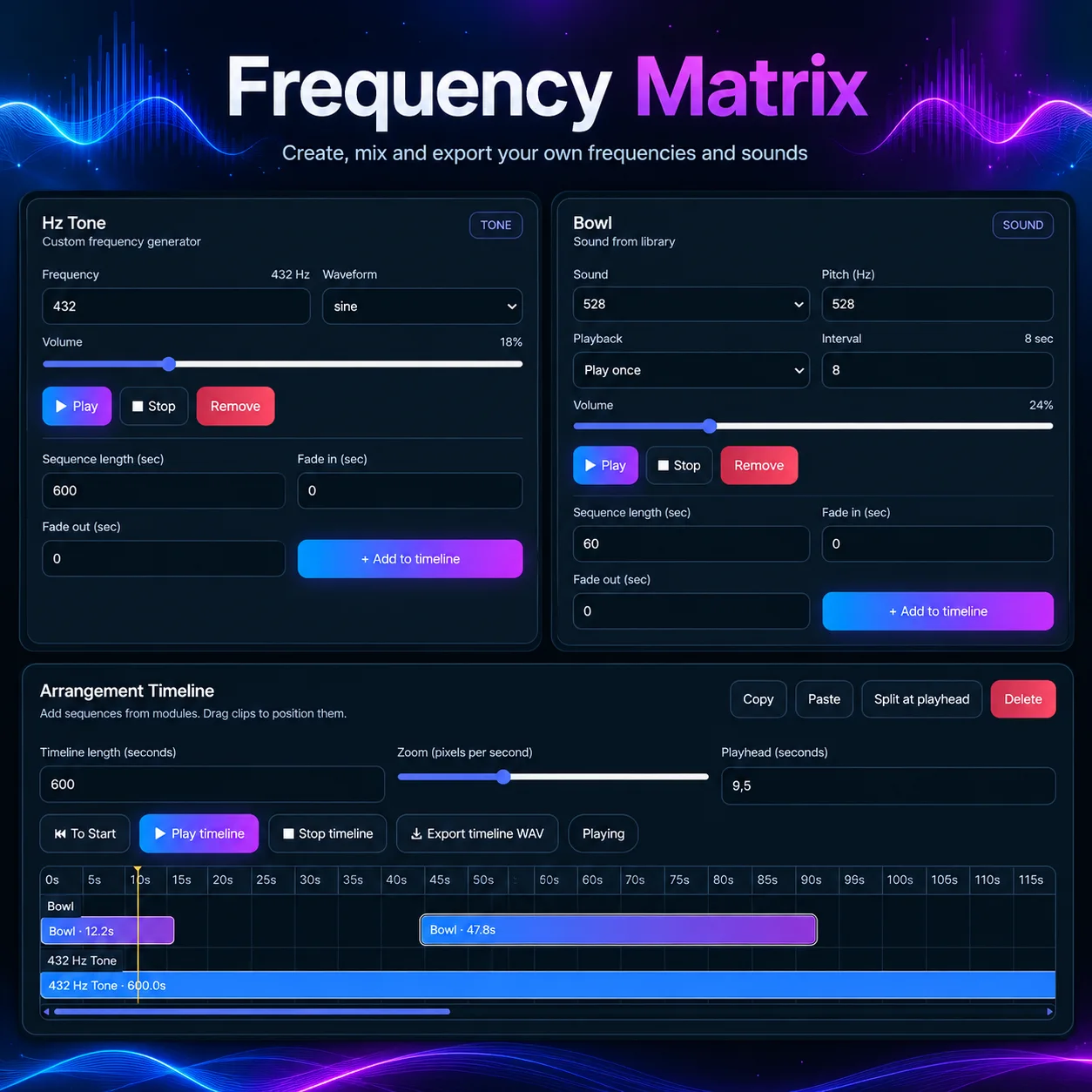
Frequency Matrix
Create your own soundscapes with custom frequencies, layered audio and a built-in timeline DAW. Generate, arr…

Video Forge
Upload one or more images, add your soundtrack, and bring everything to life with customizable motion and vis…

Birthday Grid
Turn any birthdate into a visual numerology grid. Birthday Grid reveals active numbers, repetitions, complete…