

The Accidental Museum in Your Air Filter
A used HVAC or air-purifier filter is not merely grimy refuse. It is a biased, time-blurred sample of particles that passed through a building: outdoor pollen and soot, indoor cooking particles, fibres, spores and fragments of daily life. The trick is learning what that archive can reveal—and where its story stops.
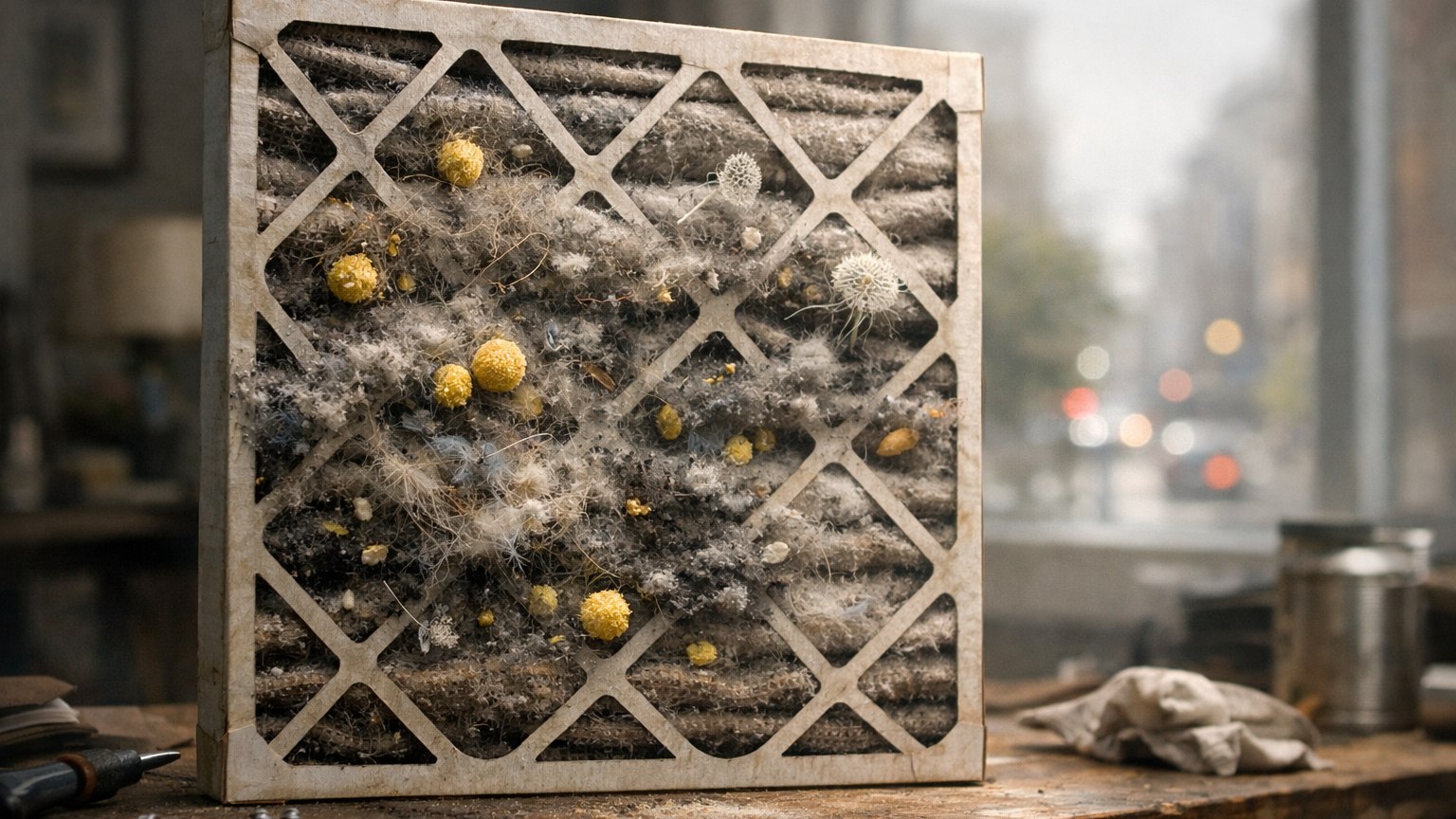
When a furnace filter is pulled from its slot, it can look less like a household part than a failed attempt at sedimentary geology: a grey felt of lint, dark grit in the pleats, perhaps a yellow wash of pollen. Most of it goes straight into a trash bag. Yet an HVAC filter has spent weeks or months intercepting some of the air circulated through a building. In that narrow sense, it is an accidental museum: an archive made not by curators, but by fans, ducts, open windows, cooking pans, shoes and weather. EPA: Air Cleaners and Air Filters in the Home
The important word is some. A filter is not a neutral census of indoor life. Its contents reflect particles that became airborne, reached the air drawn into the system or purifier, passed through while the fan was operating, and were captured by that particular medium. Read with that limitation in mind, filter dust can inform questions about a building and its environmental setting. Read carelessly, it can invite stories the evidence cannot support. Filter forensics: microbiota recovery from residential HVAC filters
A building’s rough autobiography
Indoor particulate matter is a mixture, not a single substance. EPA lists outdoor particle pollution, cooking, cleaning, combustion, biological contaminants, printers and indoor chemical reactions among its sources. Outdoor particles—including vehicle exhaust, road dust, pollen and wildfire smoke—can enter through doors, windows, cracks and other openings. EPA: Sources of Indoor Particulate Matter
That gives a used filter its modest evidentiary power. In a study of 59 homes in central Texas, researchers analyzed HVAC-filter dust for fungal and bacterial DNA, selected fungal species, endotoxin, phthalates and organophosphate esters. They used the term quantitative filter forensics for an approach that combines extracted filter dust with measurements of air volume through the filter and filter efficiency to estimate integrated average concentrations of particle-bound material. Quantitative filter forensics with residential HVAC filters to assess indoor concentrations
HVAC filters can therefore serve as long-duration, spatially integrated sampling media for some particle-bound material. But the result is neither a clinical test nor a complete description of a room. Research on microbiota recovery from residential filters identifies several sources of uncertainty, including how representative the air reaching the filter is, uneven material across the filter surface, dust-extraction choices and laboratory processing. Filter forensics: microbiota recovery from residential HVAC filters
Why the archive is biased
Filters collect air that reaches them, not every particle produced in every corner of a building. A central HVAC filter treats air moving through that system; a portable cleaner treats air drawn through its own fan. EPA describes central filters as intended to filter air throughout a home and portable cleaners as intended for a single room or area. EPA: Air Cleaners and Air Filters in the Home
Particle size further edits the collection. Larger suspended particles tend to fall out of the air more quickly, while a filter’s capture performance varies with particle size and airflow. ASHRAE Standard 52.2 is a laboratory test method: it evaluates removal efficiency by particle size and provides for upstream and downstream counts of particles from 0.3 to 10 micrometres. That range is a testing framework, not a promise that a filter captures every particle within it under household conditions. ASHRAE Standard 52.2: Titles, Purposes and Scopes
This is why a dark filter is not a neat bar chart of exposure. Its colour alone cannot distinguish among outdoor pollution, cooking, candles, fireplaces or other particle sources. Nor does a modest visible dust load prove that indoor air is clean: EPA describes filtration as a supplement to source control and ventilation, and notes that air cleaners and HVAC filters cannot remove all pollutants from indoor air. EPA: Air Cleaners and Air Filters in the Home
The chemistry of ordinary routines
The phrase “chemical residue” deserves care. Cooking, cleaning, combustion and some chemical reactions can generate indoor particulate matter. But an ordinary HVAC filter does not preserve a complete chemical diary. What can be inferred depends on whether a substance is particle-bound, how material changes on the filter, how dust is recovered and what a laboratory method can measure. A filter may support a narrow question about an integrated particle sample; by itself, it cannot reliably identify a particular product, person or day. EPA: Sources of Indoor Particulate Matter Quantitative filter forensics with residential HVAC filters to assess indoor concentrations
The same restraint applies to biology. A report of microbial DNA in filter dust is a report of what the recovery and analytical method detected in that shared environmental sample; it is not, by itself, a diagnosis or a demonstration of what is happening in a particular room. In the residential-filter study, DNA quantities and the microbial communities reported varied with the dust-recovery method. Comparative interpretation, together with knowledge of the HVAC system and building, is more defensible than treating a used filter as a standalone household diagnostic. Filter forensics: microbiota recovery from residential HVAC filters
From maintenance item to monitoring tool
During wildfire-smoke episodes, filter condition can be part of an operational picture, but not a standalone measure of protection. EPA advises limiting smoky-air entry, avoiding activities that add indoor particles, and using a MERV 13 or higher HVAC filter when the system can accommodate it. EPA also advises running the HVAC fan continuously to maximize a filter’s effectiveness during smoky periods. EPA: Strategies to Reduce Exposure Indoors
Even then, portable-cleaner performance in an occupied building may differ from a sealed-room test. A NIST-led test-house study found that continuing outdoor infiltration and movement between building zones reduced steady-state cleaning effectiveness relative to a sealed-house pulse experiment. The practical lesson is less glamorous than a blackened pleat: particle control depends on the cleaner or filter, but also on infiltration, airflow and where people are in the building. NIST: Particle transport and building ventilation limit indoor air cleaner performance during wildfire smoke events
Filters may also have a role as screening samples after unusual contamination events. In experiments using Bacillus atrophaeus spores on HVAC filters, recovery differed substantially by sampling approach; direct extraction outperformed the vacuum methods tested. The authors concluded that HVAC-filter sampling could offer a rapid, relatively inexpensive way to indicate the extent of contamination after a wide-area biological-release incident. That is a building-investigation use—not a household diagnostic kit. Evaluation of sampling methods for Bacillus spore-contaminated HVAC filters
Could the principle extend beyond buildings? Possibly—but this remains a research proposition, not an established household service. A 2026 study that paired purpose-built airborne-eDNA filters with light traps for moth monitoring found that eDNA detected species missed by the traps, while detecting 41% fewer species overall; eDNA read counts did not correlate with trap abundance. Standardized airborne-DNA sampling may become a useful complement to conventional ecological monitoring. It does not show that an old home furnace filter can identify a local invasion or count insects. Airborne Environmental DNA for Moth Monitoring: Effectiveness, Challenges, and Complementarity With Traditional Methods
How to read the evidence without inventing a mystery
The most valuable question to ask of a filter is not “What secret does this prove?” but “What process could plausibly have put this material here?” A pollen-rich sample may fit an open-window season; dark particle loading may fit one or several combustion-related or outdoor sources; a sudden burden of fibres may warrant a look at textiles, cleaning or renovation. These are hypotheses, not verdicts, until checked against timing, ventilation, nearby conditions and, when the stakes justify it, direct measurements. EPA: Sources of Indoor Particulate Matter
That is the real curiosity of the filter. It records neither a household’s identity nor a reliable medical profile nor a forensic confession. It records a partial encounter between an inhabited space and moving air. Seen properly, the discarded pleat is a lesson in environmental evidence: meaningful because it is incomplete, and most revealing when it directs attention beyond itself—to airflow, sources, maintenance and the larger air we share. EPA: Air Cleaners and Air Filters in the Home
Sources and references
- Sources of Indoor Particulate Matter
- Air Cleaners and Air Filters in the Home
- Quantitative filter forensics with residential HVAC filters to assess indoor concentrations
- Filter forensics: microbiota recovery from residential HVAC filters
- ANSI/ASHRAE Standard 52.2: Method of Testing General Ventilation Air Cleaning Devices for Removal Efficiency by Particle Size
- Strategies to Reduce Exposure Indoors
- Particle transport and building ventilation limit indoor air cleaner performance during wildfire smoke events
- Evaluation of sampling methods for Bacillus spore-contaminated HVAC filters
- Airborne Environmental DNA for Moth Monitoring: Effectiveness, Challenges, and Complementarity With Traditional Methods
More to read

The Library That Must Never Be Opened
At Herculaneum, some of the most precious books from the ancient world survive as blackened, tightly wound cy…

Earth’s Oldest Witnesses Are Not Rocks, but Grains of Sand
Tiny zircon crystals have outlived the landscapes that formed them. Their chemical archives offer a startling…

When Noon Fell From the Sky: The Forgotten Drama of Public Time
Before time lived silently in phones and wristwatches, cities made it visible: a red ball dropped from an obs…
Apps to use
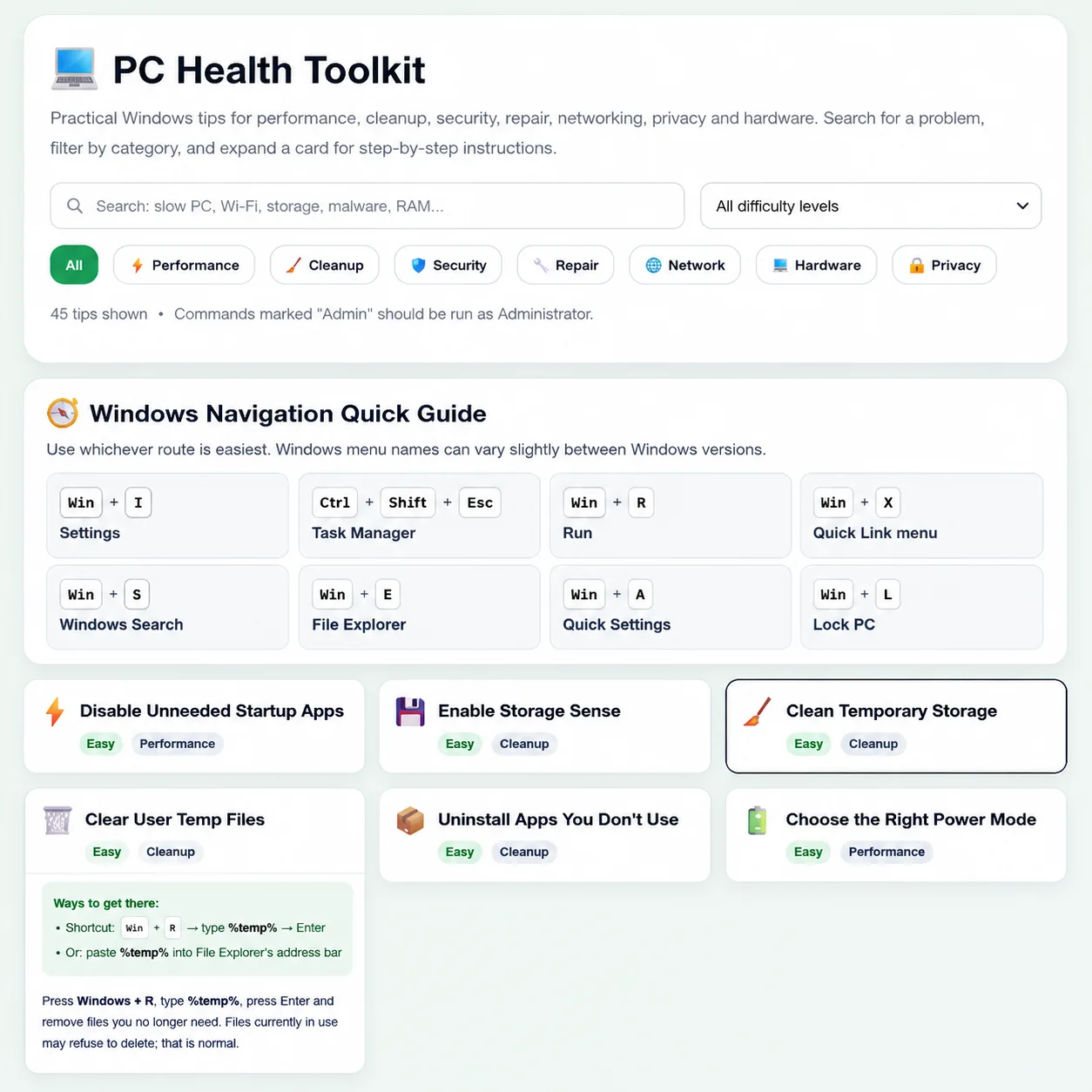
PC Health Toolkit
Explore 45 step-by-step tips covering performance, cleanup, security, system repair, networking, privacy, and…
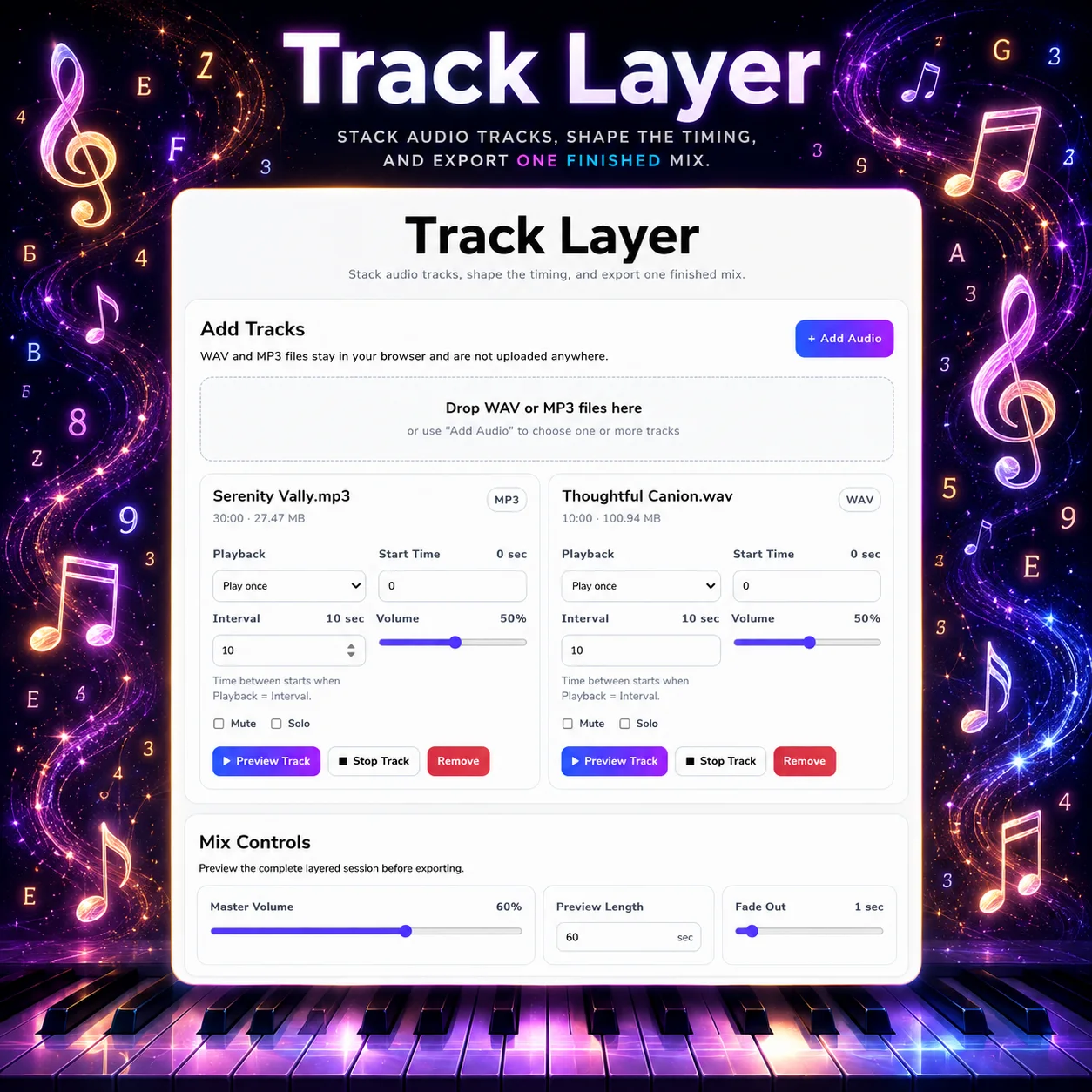
Track Layer
Layer multiple audio tracks, control how they play, and export everything as one finished WAV mix.
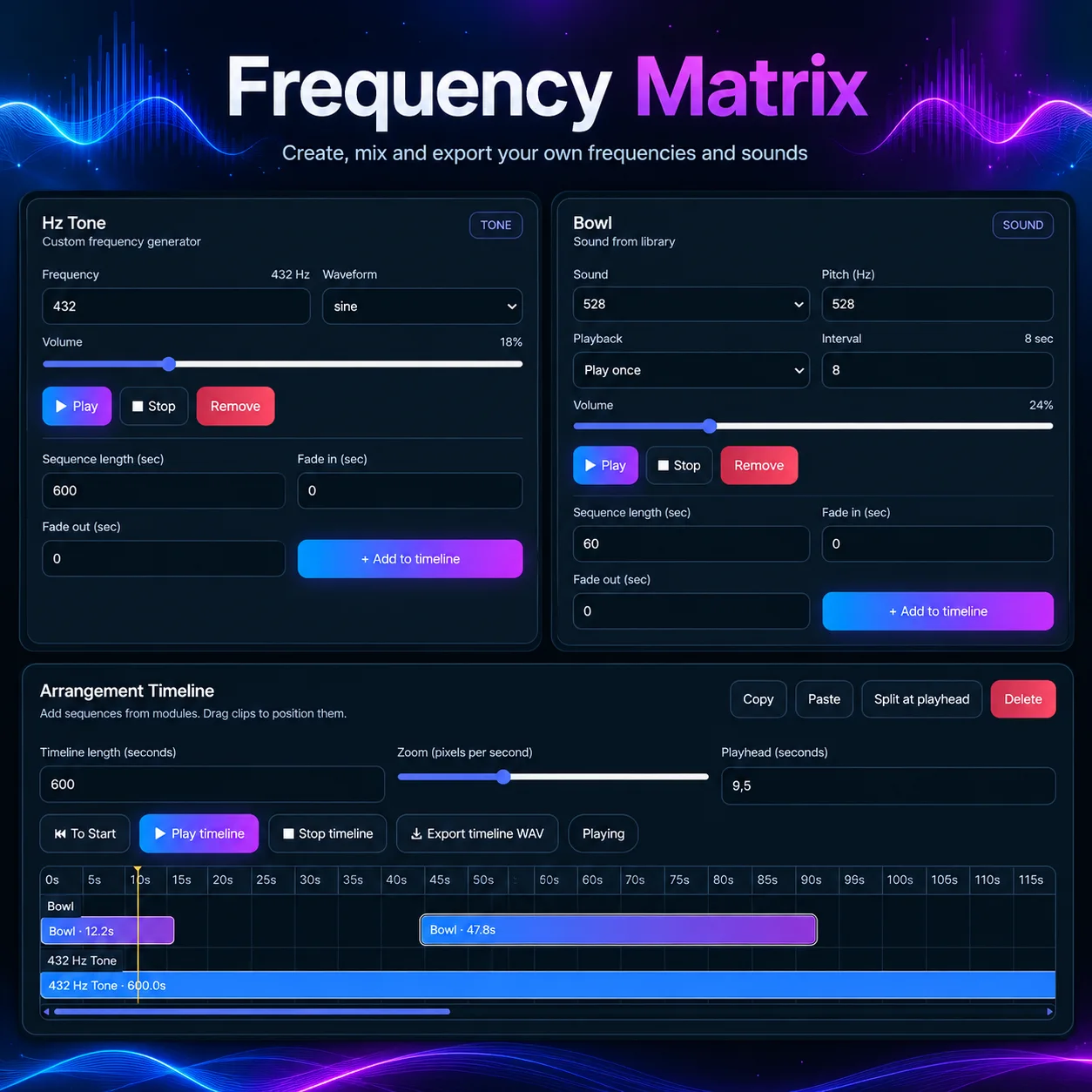
Frequency Matrix
Create your own soundscapes with custom frequencies, layered audio and a built-in timeline DAW. Generate, arr…