

Your Future Self May Be a Committee, Not a Destination
We talk about “becoming ourselves” as though a finished person is waiting ahead. But the mind may be doing something stranger: convening a shifting committee of possible future selves, each asking the present for time, sacrifice and belief.

A woman rehearses a resignation speech while washing dishes. A man imagines himself five years sober while standing outside a bar. Someone else sees, with embarrassing clarity, the version of herself who never applied for the job. None of these people has travelled through time. Yet each has met a figure who can influence a real decision today.
Psychologists call the capacity to imagine specific personal events in the future episodic future thinking. It is not merely making a list of goals. It involves building scenes: a place, a body, other people, an emotional atmosphere, a moment that may never happen. Research suggests that these simulations commonly draw on and recombine elements of remembered experience; future thought is, in that sense, an act of imaginative reconstruction rather than a private preview of what is destined to occur. Episodic Future Thinking: Mechanisms and Functions
We usually treat the future self as a singular person: me, later. Save money for her. Protect her health. Avoid embarrassing her. But that phrase conceals a problem. Which later self deserves the sacrifice? The parent, the painter, the traveller, the person who stayed, the person who left, the self who forgave, the self who finally refused? Their desires may not merely differ in degree. They may demand incompatible lives.
What if the future self is not a destination at all, but a committee?
The people who borrow from the present
This is not a claim that several literal persons inhabit one body. It is a philosophical model for a familiar psychological fact: we can vividly represent more than one possible continuation of our lives, and those representations can pull our choices in different directions. The mind is less like an arrow aimed at a single endpoint than like a chamber in which possible heirs argue over an unfinished estate.
One imagined heir wants security. Another wants intensity. A third wants to be good in a way that costs comfort. A fourth wants to remain recognizable to the people who loved the earlier version of you. The present self becomes their executor: the only one with access to the calendar, the bank account, the apology, the application form, the open door.
This reframes a common experience. Indecision is not always ignorance about what one “really wants.” Sometimes it is a conflict between several futures that are each psychologically alive. The person unable to choose between graduate school and caring for a parent may not need a better productivity system. They may be facing an honest metaphysical difficulty: how can one present life be fair to versions of a person who cannot all come into existence?
Philosophers of personal identity have long questioned what makes a person at one time the same person at another. Psychological accounts emphasize continuity through memory, intentions, desires and other connected mental states. Yet continuity is not identity in the ordinary emotional sense: a later person can remain connected to us while becoming startlingly unfamiliar. Personal Identity and Ethics
The committee model takes that unfamiliarity seriously. Your future self is not simply your current self after a delay, like milk becoming yogurt. It is a successor shaped by encounters, losses, habits, other people’s responses and choices that have not yet been made. To care for that person is admirable. To obey an imagined version of that person without question is something else: a form of government by an unelected citizen.
Why some futures feel as though they are already watching
Future scenes often arrive without being summoned. A glimpse of a stroller, an old song, the smell of a hospital corridor, a headline about layoffs: suddenly a whole possible life seems present. One account of spontaneous future thinking proposes that many such thoughts are reappearances of scenarios the mind has already constructed, often connected to upcoming goals or concerns. In plain language, the mind may rehearse a possible future until it acquires the eerie familiarity of memory. Spontaneous and deliberate future thinking: a dual process account
That familiarity can be mistaken for prophecy. A vividly rehearsed future may feel less like an option than a summons. But vividness is not authority. The mind is excellent at furnishing a room it has never entered. It can give a possibility the texture of inevitability because it has assembled it from real materials: your old kitchen, your former lover’s laugh, a city you once visited, a fear you know by heart.
Here the strange implication begins to open. Perhaps imagination is not valuable because it tells us what will happen. Perhaps it is valuable because it lets unrealized lives make a provisional appearance before we decide whether to feed them. A possible self is not a forecast. It is a petition.
Seen this way, anxiety about the future can sometimes be understood as political overload. Too many petitions arrive at once. The ambitious self presents charts. The cautious self presents disaster footage. The romantic self arrives with one photograph. The dutiful self does not speak loudly but refuses to leave. No wonder the present can feel exhausted: it is trying to negotiate among lives that cannot all be lived.
A constitution for becoming
The usual advice is to find the authentic future self and commit. There is wisdom in commitment, but the search for one hidden, prewritten identity can become another prison. Personal identity, in the everyday sense, is not a fixed inner object waiting to be excavated; it includes the properties, attachments and roles a person experiences as defining, and those can change. Personal Identity
A more useful question may be: Which future selves should have a vote, and what kind of vote?
Not every imaginable self deserves equal authority. The self who wants revenge may be vivid but transient. The self who wants prestige may be borrowing its desire from an audience that will not be there at midnight. The self who wants rest may sound unambitious but be carrying a truth the louder members of the committee do not understand. The task is neither to indulge every future nor to crown one permanently. It is to create a constitution for becoming.
Such a constitution does not need to be grand. It may consist of a few recurring questions:
- What does this possible self ask me to sacrifice now? Name the cost in time, money, relationships, health, attention or integrity.
- Would I still respect this future if it never became socially visible? This separates a lived value from a performance of identity.
- What present capacity does this future require me to protect? A dream that destroys the person’s ability to love, rest, think or remain solvent may be demanding too much tribute.
This is not a technique for eliminating uncertainty. It is a way to give uncertainty shape. The goal is not to discover which future is secretly real; none is real yet. The goal is to make present choices that can be defended to several plausible successors, including the one who will someday look back and find your certainty naive.
The moral surprise: we owe the future less obedience and more hospitality
There is a familiar moral language around the future self: do not burden them, do not betray them, do not make them clean up your mess. That language matters. A person who spends recklessly, damages relationships or refuses necessary responsibilities can indeed hand suffering forward. But obligation has another side. If the future person is partly made by what we permit ourselves to imagine now, then we also owe them room to become someone we cannot yet endorse.
This means that responsibility is not only restraint. It is hospitality toward change. The current self should not dominate merely because it is currently holding the pen.
Paul Ricoeur’s idea of narrative identity offers a useful companion to this thought: a self is not simply a substance that stays identical beneath events, but something understood through the telling, retelling and taking responsibility for a life. A life-story is not freely invented from nothing, yet neither is it discovered like a buried document. Paul Ricoeur
The committee metaphor adds a complication. Narrative is not only told backward, after events have settled into plot. It is told forward in drafts. We are constantly composing scenes in which a later “I” explains why this moment mattered. The danger is that we begin serving the story rather than living the life. We turn down tenderness because it does not fit the heroic arc; we stay in pain because leaving would spoil the identity we have rehearsed; we mistake consistency for truth.
The wiser ambition may be not to become perfectly coherent, but to become responsibly revisable. A person can honor a former dream without being enslaved to it. They can grieve a future that will not happen without treating that grief as proof of failure. They can choose one path while acknowledging that another version of them was real as a possibility, and deserved a farewell.
Your future self is not standing at the end of time, waiting to judge whether you arrived correctly. There are several of them, and most will vanish as your choices make other lives possible. The present is not a hallway leading to the true person. It is the strange assembly room where truth, desire, fear and imagination decide which person gets a chance to exist.
Sources and references
More to read

The Afterlife of the Unlived: Do Forgotten Possibilities Still Exist?
An unrealized future can vanish from memory, paper and testimony. But does that erase it completely—or does i…

If You Don’t Hear an Inner Voice, Who Is Doing the Thinking?
The discovery that inner speech varies radically from person to person unsettles a familiar assumption: that …

The Inner Pass and the Outer Pass: PC6, SJ5, and the Art of Emotional Sovereignty
PC6 Neiguan and SJ5 Waiguan sit on opposite sides of the forearm like two doors in one wall. Read philosophic…
Apps to use
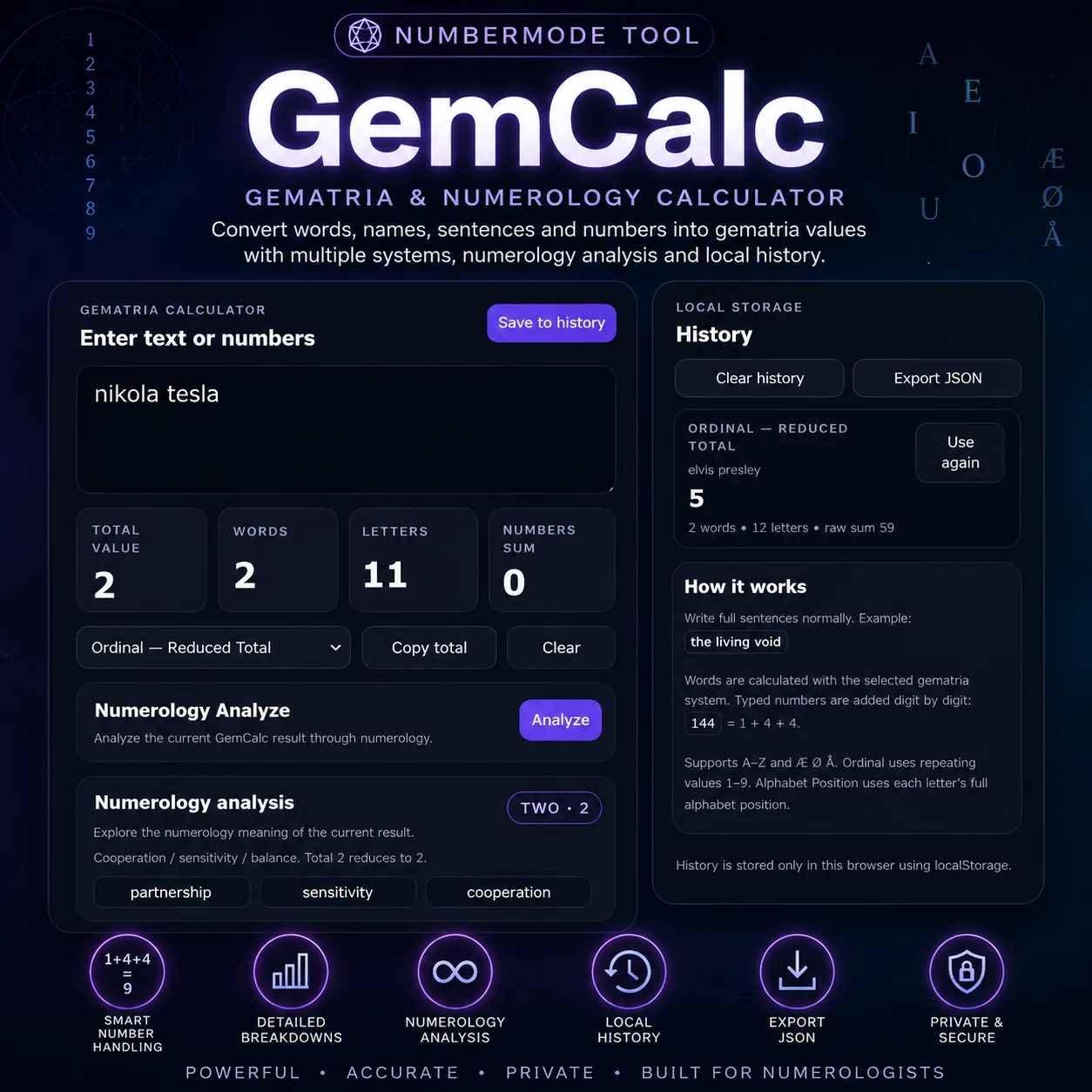
GemCalc
A powerful gematria and numerology calculator for converting words, names, phrases and numbers into meaningfu…
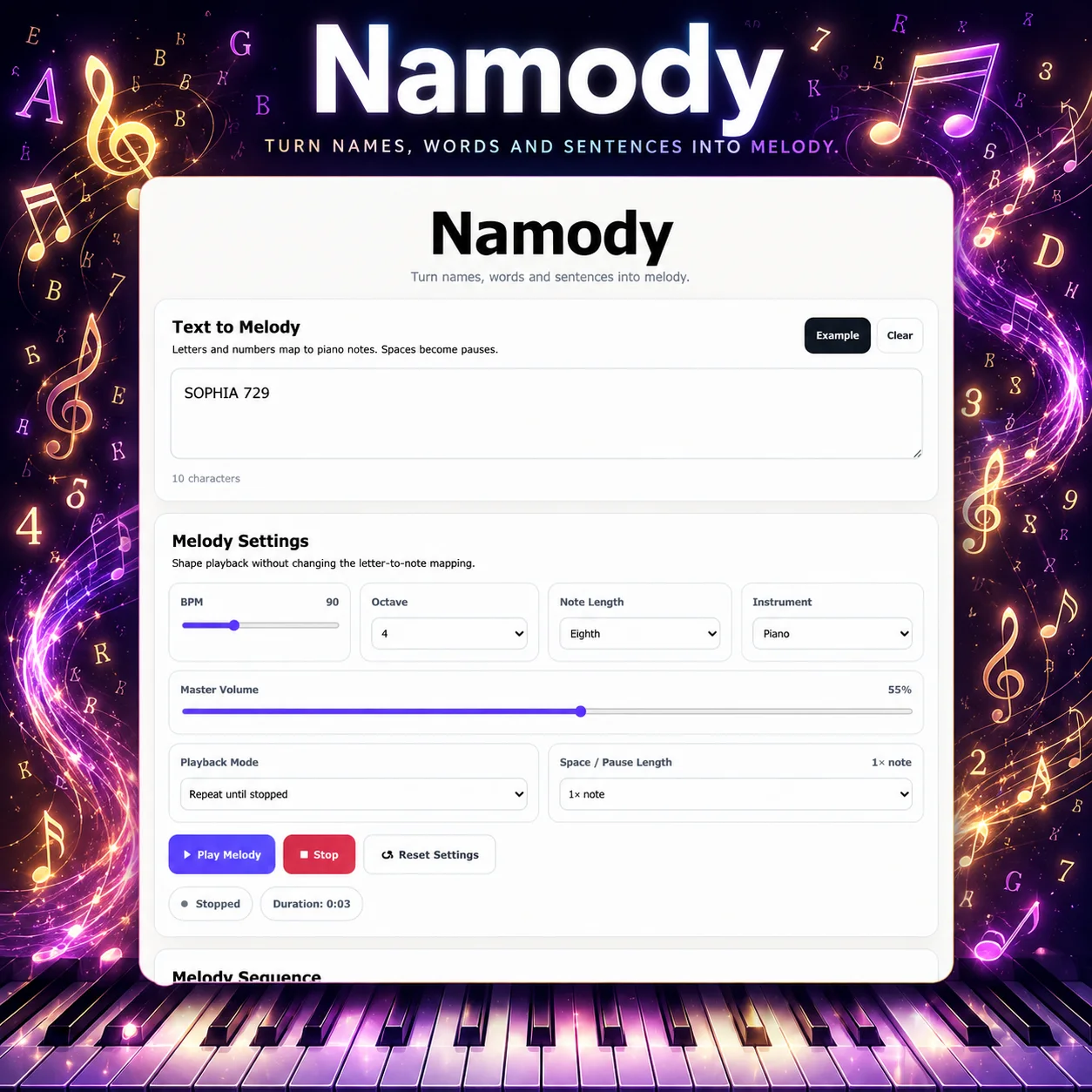
Namody
Turn names, words, numbers, and sentences into unique melodies.

MIDI Art Studio
Transform images into musical art! MIDI Art Studio converts pictures, logos, and drawings into colorful piano…