

Can Touch Be a Form of Knowledge?
A hand on the neck, stomach, or chest can change more than discomfort. It can make sensation legible—without turning bodily feeling into diagnosis or mystical proof.

Editorial thought experiment: Imagine a hand resting at the base of the neck after a day of screens and deadlines; another cupping an unsettled stomach before a difficult conversation; a runner pressing a thumb into a calf while wondering whether to continue. These are scenes of inquiry, not diagnoses. They invite a person to linger with words such as tight, hollow, fluttering, hot, or braced.
Editorial interpretation: The important word is distinct, not explained. A sensation can be attended to without being converted into a medical conclusion. That boundary is where touch becomes intellectually interesting: not a diagnostic oracle, nor merely a comfort device, but one possible practice of attending to lived experience.
Three different kinds of knowing
Documented source fact: Interoception is described in current research as the set of processes by which an organism senses, interprets, integrates, and regulates signals from within itself. The framework includes more than a single inner sense; it concerns signals, interpretation, integration, and regulation across brain and body. source
Editorial interpretation: This suggests a useful grammar for self-attunement. First comes sensation: there is a constriction in my chest; my abdomen feels knotted. Then comes interpretation: I may be anxious; I may need food, rest, or a break from this posture. Diagnosis is a different kind of claim: this sensation indicates a particular disease requiring a particular treatment. The first is immediate experience; the second is meaning-making; the third reaches beyond what touch alone can settle.
Documented source fact: Chest pain can have many causes, including some that are serious. MedlinePlus advises immediate medical care for chest pain that does not go away, crushing pain or pressure, or chest pain accompanied by nausea, sweating, dizziness, or shortness of breath. source
Why contact changes what can be felt
Editorial interpretation: A palm over the abdomen can become a chosen point of return: not an instrument that translates the body into a sentence, but a way of remaining with experience before immediately making it into a story. The value of this image is contemplative. It asks what changes when one meets a sensation with patience rather than demands an instant explanation.
Documented source fact: Research on affective touch distinguishes it from discriminative touch. C-tactile afferents in hairy skin respond preferentially to gentle, slow, caress-like stroking at temperatures near human skin, and the review links their activity with pleasant affect and identifies projections to the posterior insular cortex. The same review emphasizes that personal relationships, social setting, culture, and other contextual factors shape how social touch is defined and experienced. source
Documented source fact: A systematic review and multilevel meta-analysis of touch interventions included 137 studies in its meta-analysis and reported benefits across several physical and mental-health outcomes, including pain, depression, and anxiety measures in adults. Its authors also noted significant small-study bias and the impossibility of blinding experimental conditions. source
Editorial interpretation: The modest conclusion is still meaningful: touch can matter in care without becoming a universal remedy or a single, complete biological explanation for every experience of relief.
The body as subject, not specimen
Documented source fact: In Phenomenology of Perception, Maurice Merleau-Ponty develops an account of the lived body as inseparable from a person’s situation and experience in the world. The work’s framing resists treating the body as merely a biological or physical unit. source
Editorial interpretation: A hand on one’s own neck makes the body seem, for a moment, both touching and touched. That doubleness is philosophically suggestive. The body is not only something one observes from outside; it is also the place from which one reaches, recoils, works, waits, loves, and endures.
Editorial recommendation: There is no need to turn this insight into an opposition between lived experience and medical care. Let sensation remain sensation until there is good reason to make a larger claim. When symptoms are concerning, seek appropriate professional assessment; when experience is ordinary but difficult, begin by describing what is actually present.
Traditions of touch, without collapsing them into proof
Documented source fact: The National Center for Complementary and Integrative Health describes traditional Chinese medicine as a set of approaches that has evolved over thousands of years and may include acupuncture, tai chi, and herbal products. It reports differing findings for different traditional Chinese medicine practices and uses, and advises people not to use traditional Chinese medicine to replace or delay conventional care. source
Editorial interpretation: This is a reason for intellectual honesty without cultural dismissal. A ritual of touch can carry meanings of attention, hope, relationship, or spiritual presence for those who practice it. Those meanings need not be casually mocked, nor need they be recast as established physical mechanisms. A person can honor a practice’s symbolic or metaphysical language while remaining careful about what has and has not been demonstrated.
Documented source fact: NCCIH notes that some acupuncture trials have found real and sham acupuncture similarly effective, indicating a placebo effect in those trials; it also reports that findings across studies suggest acupuncture may help with some chronic pain conditions. source
Editorial interpretation: Rather than using “placebo” as a put-down, one might ask what a healing encounter contains besides its stated technique: expectation, ritual, attention, setting, and the feeling of being received. That question does not validate every explanation offered for a practice. It asks us not to confuse the reality of an experience with certainty about its mechanism.
Attention without surveillance
Documented source fact: Research on social touch describes affective touch as highly dependent on context and notes that affective tactile experience can range from pleasant to unpleasant. source
Editorial recommendation: Treat touch as an invitation, not an entitlement. Ask before touching another person. Notice whether contact feels welcome, neutral, irritating, or overwhelming. The ethical value of touch lies partly in preserving the other person’s ability to choose distance as well as closeness.
Editorial recommendation: A small practice may be enough: place a hand where it feels welcome; notice pressure, temperature, pace of breath, and the urge either to stay or move away; describe the sensation before explaining it; then choose a proportionate response. Rest, eat, stretch, seek company, make an appointment, or stop an activity. For chest symptoms meeting urgent warning signs, seek immediate medical care. source
Editorial interpretation: That may be touch’s quiet philosophical force. The body is not a sealed container emitting data for a detached observer to decode. It is a living threshold between self and world: the place from which posture, memory, relationship, work, grief, culture, and care become lived rather than merely observed. To touch it attentively is not to discover a hidden diagnosis in the palm. It is to become a more responsible witness to what it is already, imperfectly, trying to say.
Sources and references
- The Emerging Science of Interoception: Sensing, Integrating, Interpreting, and Regulating Signals within the Self
- Social touch and human development
- A systematic review and multivariate meta-analysis of the physical and mental health benefits of touch interventions
- Traditional Chinese Medicine: What You Need To Know
- Phenomenology of Perception
- Chest Pain
More to read

10 Lesser-Known Acupuncture Points: A Map of Pathways, Thresholds and Traditional Use
Beyond the famous hand and leg points lies a quieter acupuncture map: ten classical sites whose locations, po…

10 Lesser-Known Acupuncture Points: A Map of Crossroads, Reservoirs and Hidden Pathways
Beyond acupuncture’s familiar headline points lies a quieter set of locations that reveal how Traditional Chi…

Can Touch Be a Form of Knowledge?
A hand on the chest or neck may not diagnose what is wrong. But it can change what becomes perceptible—and th…
Apps to use
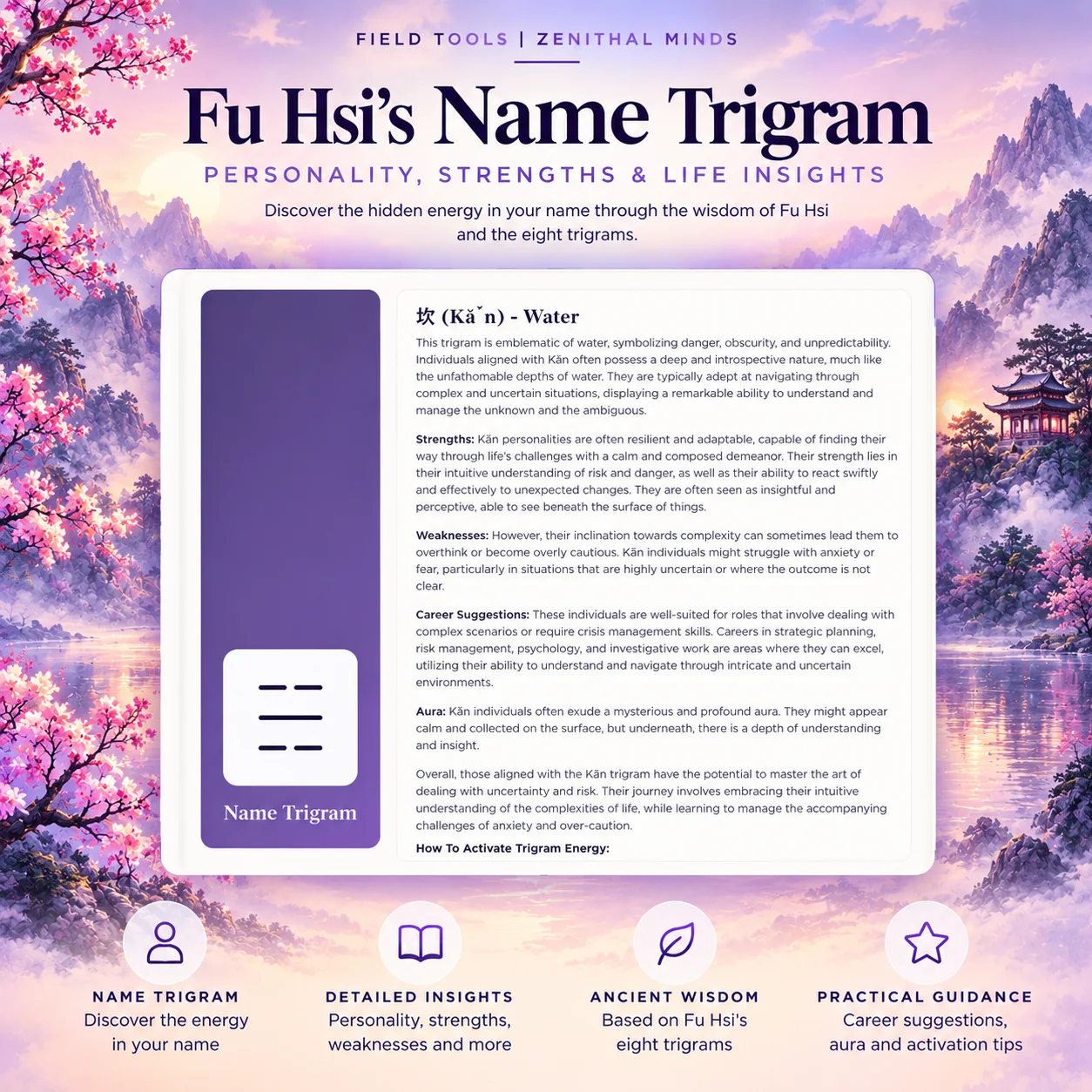
Fu Hsi's Name Trigram
Discover the trigram hidden within your name and explore its personality traits, strengths, weaknesses, caree…

Fu Hsi's Octogram
Discover your birth trigram, explore your current life phase, and search past or future phases through Fu Hsi…

Chinese Zodiac
Discover your Chinese zodiac animal and element from your birth date, and explore its traditional traits, str…